The angle everyone defaults to
Straight down is the angle your phone wants and the angle buyers skip. You are standing, the foot is on the floor, the lens points at the ceiling’s opposite, and the sole becomes a map. Maps are useful. They are not what people save. A top-down frame shows every toe at once and describes none of them. The arch flattens into a pale patch. The heel is a circle. Nothing leads anywhere, so the eye arrives, confirms that a foot is present, and leaves.
Sellers keep shooting it because it is easy to frame. You can see the whole screen without lying on the rug. Easy framing is why the scroll is full of the same picture wearing different nail polish. If your set opens on that view, you have spent the first impression on the shot people already have fifty of. Later frames can be clever. Most people never reach them.
Drop the lens until it feels wrong
Tilt the phone low, almost level with the floor, and the geometry changes before you change the pose. The arch becomes a curve instead of a region. The toes stack in a line that points into the frame. A low lens is how a flat object grows a front and a side. Feet are not flat. Overhead shooting is what convinces the camera that they are.
The position feels ugly while you are in it. Your cheek is near the skirting board. The phone is propped on a book, a shoe, a folded jumper, anything that holds still. You are looking at a preview that makes your own foot look larger than it does in a mirror. That enlargement is the sale. Buyers are not in the room judging the contortion. They are looking at a frame where the toes arrive first and the arch explains itself.
Start lower than you think you need. If the first test still looks like a polite overhead, take one more book out from under the phone. The useful band is roughly the height of the ankle bone down to the floor. Above that, you drift back toward the map. Below that, you are shooting a horizon of skin with no context, which can work as a third frame and fails as the only frame.
What the low view does to the arch
An arch is a shadow story. From above, the shadow hides under the foot and the camera records the top plane of the sole’s edge, which is barely a plane at all. From floor level, the shadow sits beside the curve and draws it. Window light from the side helps, but the angle is doing separate work. Even in soft overcast, a low lens gives the arch a silhouette. Silhouettes are why someone pauses.
Toes lead because they are closer to the lens than the heel. Closer things look bigger. That is ordinary optics, and it is the entire trick. A straight-down shot makes every part of the foot compete at the same size. A low shot picks a winner. Let the toes win the opening frame. You can give the heel its own frame later, still from low, by turning the foot. You do not need a new philosophy. You need the lens to stop hovering.
Focus on the nearest toe, not on the middle of the sole. Phones hunt for contrast and will lock onto a floorboard if you let them. Tap the toe. If the heel goes soft, that is acceptable in the lead image. Soft heel, sharp toes, readable arch: that order matches how the eye moves. The reverse order looks like a mistake even when the exposure is perfect.
One foot across the other
Crossing one foot over the other gives the low angle something to stack. Two soles from above are two maps side by side. Two soles from the floor, one resting on the other, become layers. The top foot’s toes clear the bottom foot’s arch, or they do not, and both versions are usable. Overlap is information. Empty space between two parallel feet is just gap.
The cross does not need to be dramatic. An ankle rested lightly on an ankle is enough if the lens is low. A hard cross that hides both soles is a different set, and it can wait. You are trying to show skin, not to prove flexibility. If the pose numbs your foot before the timer finishes, simplify it. A numb foot shifts. Shifted frames are how a set of eight becomes a set of two.
Switch which foot is on top and shoot both. Buyers have preferences they will not announce until you have posted the version they wanted. Left over right reads differently from right over left once the lens is near the floor, because the near toes change. You will not see that difference in the room. You will see it when you compare the exports. Keep both. Pick later, when you are upright and less willing to invent reasons.
The sole that fills the frame
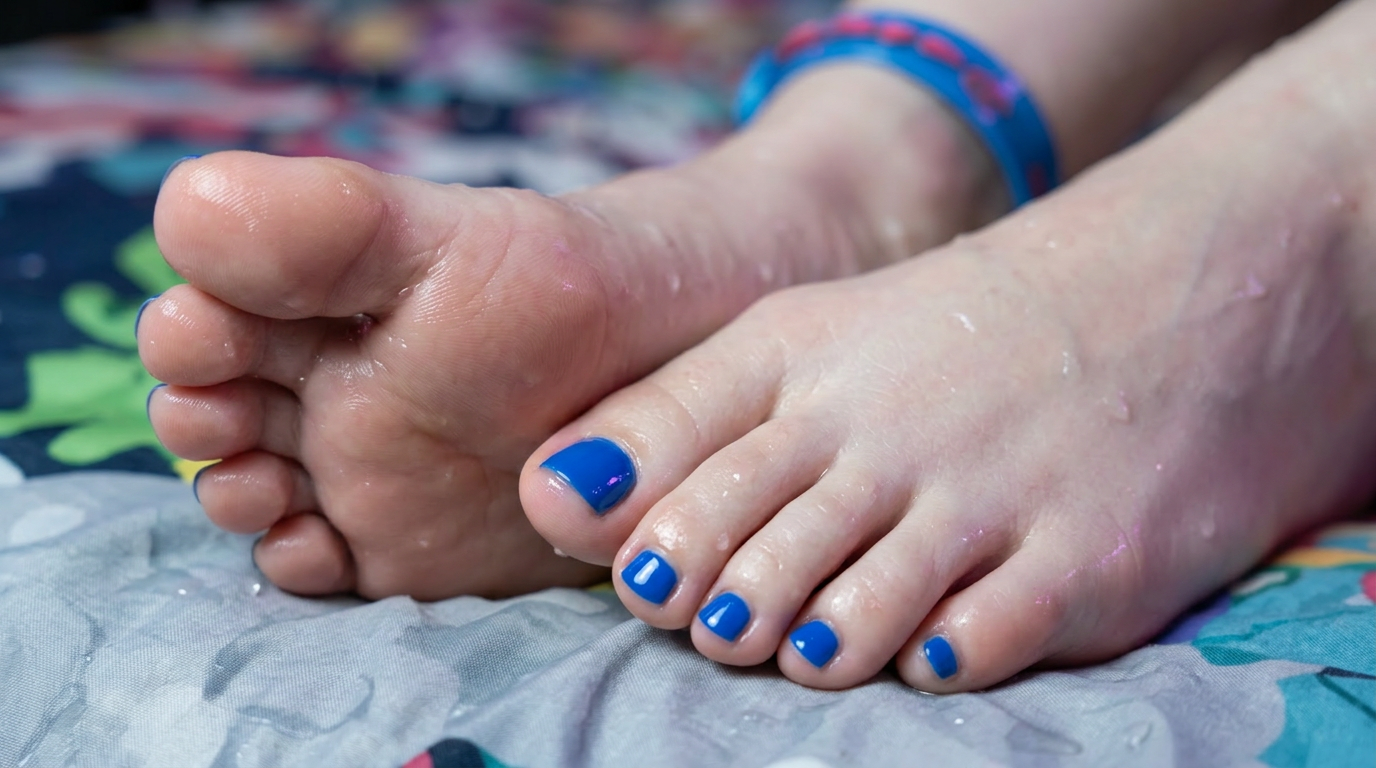
After the cross, turn one sole toward the lens and let it fill the picture. This is the frame people save for the details: creases, the ball, the quieter arch, the heel’s edge. Filling the frame is not the same as cropping a bad overhead later. If you shoot overhead and crop tight, you still have overhead light falloff and overhead proportions. If you shoot low and close, the sole arrives with its own perspective. The bottom of the toes really is nearer. The heel really does recede. That recession is what makes a fill shot feel close instead of merely large.
Do not chase the entire sole into one frame if it means backing up until the angle dies. A fill can be the front half. Another fill can be the heel and arch. Two tight frames beat one cramped frame that sneaks the floor back in at the corners. Corners full of floor are how a fill shot turns back into a map with delusions.
Dirt, lint, and a stray hair show up harder in a fill. That is not a moral issue. It is a focus issue. Wipe before you lie down, not after you have the angle. Once the phone is set, getting up to fetch a cloth changes the stack, the distance, and your patience. Patience is the real consumable in a low-angle session. The floor is not comfortable enough to redo the setup four times.
Ugly in the room, ordinary in the export
The angle looks stupid while you shoot it. You are arranged around a stack of books like someone who lost a contact lens and then got distracted. That is fine. The export does not include your elbow or your opinion of the pose. It includes a foot that has a front. Sellers who only post angles they can take while seated upright are competing with every other seated upright seller. The mild indignity is a filter. It removes the shots everyone already made.
Go figure is the correct reaction the first time a low, slightly awkward frame outperforms the flattering overhead you preferred. Flattering, in a mirror sense, often means smaller, even, and easy to ignore. Sales follow the frame that stops a thumb. Thumbs stop for depth. Depth is an angle problem more than a skin problem. Good skin in a flat angle still scrolls. Ordinary skin in a low angle gets a second look, and second looks are where saves happen.
You do not have to publish the worst of the ugly. Publish the one where the toes are sharp and the arch has a line. Delete the one where the phone slipped and the frame is half curtain. The method is undignified. The selection can still be strict. Strict selection is what keeps a low-angle set from looking accidental.
Distance, not zoom
Move the phone, or move the foot, until the crop is almost what you want. Pinch-zoom softens the creases you lowered the lens to catch. A low angle already asks the phone to focus close. Digital zoom asks it to invent detail on top of that. It will invent mush. If the toes are not big enough, take a book off the stack and slide the whole prop closer, then refocus. Closer is physical. Zoom is a guess.
Watch the near edge of the lens. At floor level a phone case can creep into the corner, a dark curve that ruins the fill. Take the case off for the session or tilt a degree more open. That dark curve is the sort of mistake you only notice after you have stood up and your knees have filed a complaint. Check the corners on the first frame, not the tenth.
Level matters less than height. A slight dutch tilt can look dynamic and can also look like the phone fell. If the horizon of the floor is wildly crooked, straighten it in the crop. If it is only a little off, leave it. Over-straightened low angles start to feel like product photos for insoles. You are not selling insoles.
Light still has to reach the near side
A low lens beside a window is the combination that makes the arch obvious. The light comes from the side, the camera looks along the floor, and the bright edge of the sole separates from the quieter middle. Put the foot between the phone and a dark corner, and the low angle will record a silhouette with no skin. Silhouettes without skin are moody for one frame and useless for a set someone paid for.
Overhead kitchen light plus a low angle is better than overhead light plus a top-down shot, and it is still worse than window light. The bulb sits in the wrong place relative to a floor-level lens. It tops the toes with a hot line and leaves the arch in a hole. If you only have the bulb tonight, lower the phone anyway, then reshoot at the window when the hour is right. Do not let a bad evening become the reference set.
Reflective floors double the foot at this height. The reflection sits right under the sole and splits attention. A matte sheet or a dull rug fixes it. If you want the reflection, push it to the side so it does not clone the toes. Cloned toes look like a glitch. Glitches get screenshotted for the wrong reason.
A short sequence that earns the save
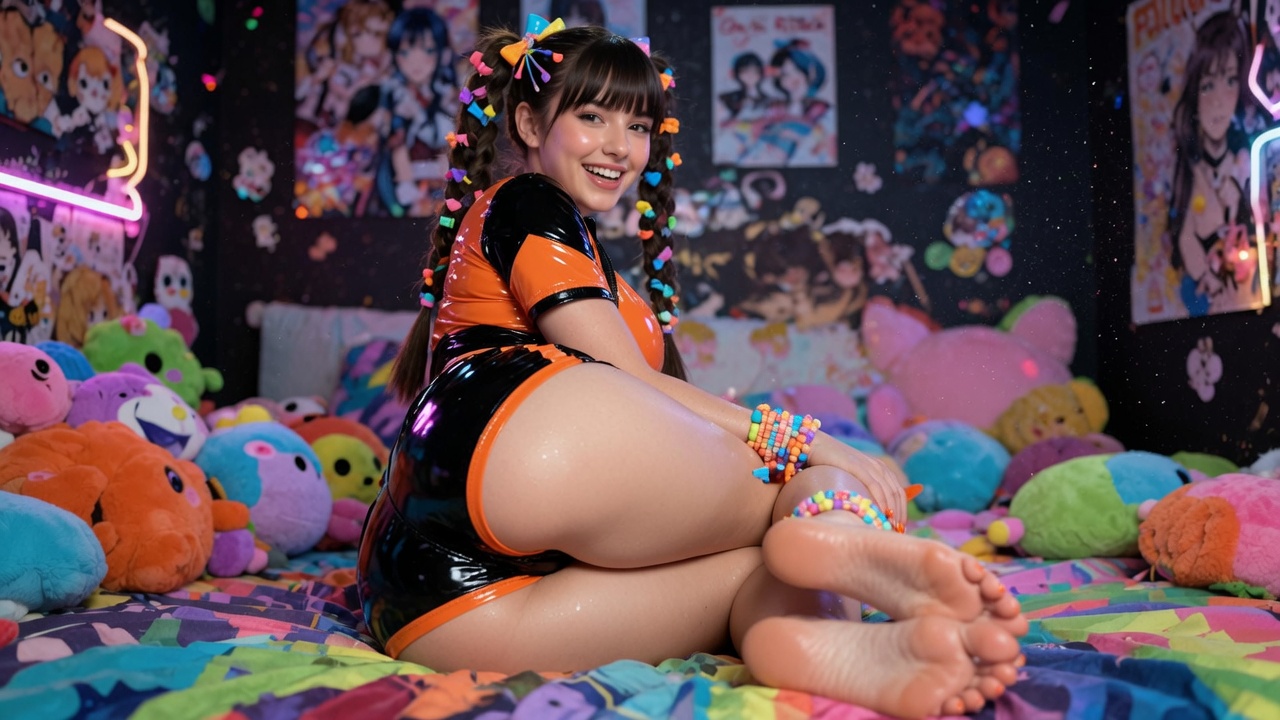
Open with the low cross, both feet, toes toward the lens. Follow with one sole filling the front half of the frame. Close with the same sole turned so the arch takes the middle. Three frames, one setup, no new location. That sequence teaches the eye where to go, then gives it the detail it stopped for. Sets that open on a full-body crop and bury the sole at the end ask too much scrolling from a person who has not paid yet.
Hold the phone still between those three. Change the foot, not the stack. Every time you rebuild the books you change the height by a thumb and the set stops matching. Matching angles across a set look intended. Intended is a quiet form of trust. Trust is why someone saves instead of nodding and moving on.
Timer on, hand clear of the light, two or three bursts per pose. Then get off the floor. Reviewing on the floor encourages you to shoot twenty more near-duplicates because standing up is annoying. Duplicates do not become a niche. They become a folder you dread culling. Cull from a chair. Keep the frame where the toes lead. Cut the frame where the heel accidentally won.
What buyers do with the frame
Saves and repeats follow the shot they can picture asking for. “The low one with the cross” is a request a buyer can type. “The normal one” is not. You are building a description as much as a photo. Low angle, cross, fill: those words fit in a message. Straight down does not inspire a message. It inspires a scroll.
Some buyers want the overhead anyway, for a record of the whole sole in even light. Give them that as a fourth frame if you like, after the low ones have done the introduction. Leading with the record shot is how sets get treated as catalogs. Catalogs are fine for people already sold. They are weak for people deciding.
If a low frame feels too close for your own taste, that taste is not the customer. Your taste was formed by mirrors and by other sellers’ overhead shots. The customer is formed by whatever stopped them last time. Test the ugly angle on one set before you decide it is not you. Often it is not you in the room, and it is exactly you in the export. Those are different rooms.
Common ways the angle dies
Backing up to “get it all in” is the first way. The moment the whole body returns, the lens has risen in spirit even if it is still near the floor. Crop with your position. Leave the calves for a different post.
Shooting from your hand while you crouch is the second way. The height wobbles, the focus hunts, and the frame gains a smear that no caption fixes. Prop the phone. Your wrist is not a tripod, especially not after a minute of holding still near the floor.
Filling the caption with apologies is the third way. You do not need to mention that the angle felt odd. The buyer cannot see the books or the complaint from your knee. Describe the set in plain terms, or describe nothing. The frame is the argument. If the frame is weak, a funnier caption will not lower the lens retroactively.
Try it once against the old shot
Shoot your usual straight-down sole. Then build the low stack and shoot the cross and the fill before the light shifts. Put the three exports side by side. The overhead will look tidy. The low pair will look closer, even if the skin and the polish did not change. Closer is the quality people pay to feel. Tidy is free all over the timeline.
Keep the low versions if they are sharp enough to crop. Delete them only if the focus missed or the case intruded. Do not delete them because they look unfamiliar. Unfamiliar is the advantage. Familiar is the scroll.
Next time, start on the floor. The overhead can be the spare, not the opener. You will spend less time wondering why a careful set went quiet, and less time blaming the polish. Polish was never the part that failed. The lens was too high, the foot was a map, and the thumb had already moved on. Lower the phone. Let the toes lead. Fill one frame with the sole. The angle will look worse in the room than it looks in the save, which is the entire deal, and it is a better deal than another tidy picture of the floor.
low angle foot photos, sole camera angle, feet pics perspective, crossed feet pose, floor level foot shot, arch leading lines, toe focus photography, fill frame sole, straight down foot photo, buyer save angles, foot set sequencing, close sole crop, phone propped low, foot photography height, overlap feet pose, sharp toe photos, sell feet pictures, foot content framing, near floor lens, detail sole shot